
Fluid Extractors, Oil Extractor Pumps, and Fluid Transfer Pumps: The Smart Way to Handle Every Drop
Whether you maintain a single vehicle, run a small repair shop, or manage a fleet, the way you remove and move fluids can make the difference between a clean, efficient job and a messy, time-consuming one. A fluid extractor, an oil extractor pump, and a fluid transfer pump all solve the same basic problem—moving liquids safely and conveniently—but they are designed for different tasks. Understanding those differences helps you choose the right tool, avoid unnecessary mess, and get more value from your maintenance routine.
Why the Right Fluid-Handling Tool Changes the Job
Traditional fluid changes often depend on gravity, drain plugs, and awkward containers. That approach works, but it is not always practical. Modern extractors and transfer pumps let you pull fluid upward, move it across distances, and keep it contained in a designated tank or container. The result is less spill risk, less contact with hot or dirty fluids, and a faster workflow in tight spaces.
When fluid handling is clean and controlled, maintenance becomes safer, quicker, and far more predictable.
Fluid Extractor: A Cleaner Approach to Routine Service
A fluid extractor is a versatile tool that uses vacuum pressure to draw fluid out of a reservoir through a dipstick tube, fill port, or extraction point. It is especially useful when a drain plug is difficult to reach or when you want to avoid lifting a vehicle. Many extractors include a graduated tank, so you can measure how much fluid came out before disposing of it responsibly.
- No drain plug needed: ideal for engines, transmissions, and small reservoirs with limited access.
- Cleaner operation: fluid goes directly into the extractor tank instead of a drain pan.
- Reusable design: many models are built for repeat use in home garages and professional shops.
A quality fluid extractor is not a replacement for every drain-and-fill job, but it is an excellent option when speed and cleanliness matter. It also helps reduce the chance of cross-threading a drain bolt or struggling with a stubborn plug.
Oil Extractor Pump: Purpose-Built for Engine Oil Changes
An oil extractor pump is a specialized type of fluid extractor designed around engine oil service. It typically includes a durable pump mechanism, flexible extraction tubes, and a tank sized for common oil capacities. For marine engines, generators, lawn equipment, and vehicles with top-mounted oil filters, an oil extractor pump can simplify routine oil changes significantly.
Where an oil extractor pump shines
- Engines with hard-to-reach drain plugs: extract oil from above without crawling underneath.
- Small equipment: ideal for mowers, snow blowers, and generators with compact oil reservoirs.
- Workshop convenience: reduces drain time and keeps used oil contained for recycling.
Always warm the oil slightly before extraction—never to the point of being dangerously hot—and make sure the extraction tube reaches the bottom of the sump. After use, clean the pump and tubes so old oil does not contaminate the next job.
Fluid Transfer Pump: One Tool, Many Fluids
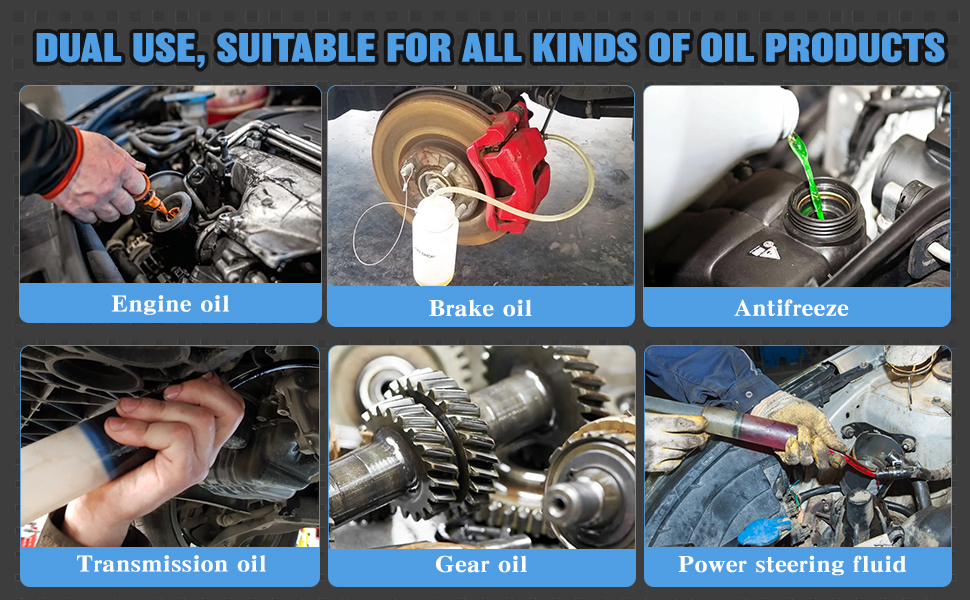
A fluid transfer pump is the general-purpose member of the family. It moves fluids from one container to another and can handle oil, coolant, transmission fluid, diesel, water, and other compatible liquids. Unlike a dedicated oil extractor, a transfer pump may be manual, battery-powered, or electric, and it often works with larger containers or remote reservoirs.
| Tool | Best for | Key advantage |
|---|---|---|
| Fluid extractor | Vacuum extraction from reservoirs | Clean, measured removal |
| Oil extractor pump | Engine oil changes | Top-side oil service |
| Fluid transfer pump | Moving fluids between containers | Versatile transfer capability |
Use a fluid transfer pump when you need to refill a differential, move diesel from a storage drum, or empty a reservoir that is not designed for vacuum extraction. Check chemical compatibility before pumping unfamiliar fluids, and never use the same pump for incompatible liquids without thorough cleaning.
Choosing the Right Capacity and Power Source
Capacity matters, but it is not the only factor. Consider how often you will use the tool, where you will store it, and whether you prefer manual operation or powered convenience. A small manual extractor may be perfect for occasional home maintenance, while a larger pneumatic or electric transfer pump is better for frequent shop use.
- Manual pumps: affordable, portable, and simple to control.
- Battery-powered pumps: convenient for remote jobs without access to power.
- Electric or air-powered pumps: efficient for high-volume or repetitive work.
Practical Tips for Safe, Efficient Use
Read the manufacturer’s instructions, inspect hoses and seals before each use, and keep fluids away from skin and eyes. Label used-oil containers clearly, and recycle fluids according to local regulations. If a pump begins to run slowly or produce inconsistent flow, stop and check for clogs, loose connections, or worn seals.
Good fluid-handling tools do more than save time—they make careful maintenance easier to repeat.
Store extractors and pumps clean and dry, and keep extraction tubes protected from sharp edges. A little maintenance after each job extends the life of the tool and helps ensure reliable performance the next time you need it.
Final Thoughts
A fluid extractor, oil extractor pump, and fluid transfer pump each serve a distinct purpose, yet together they form a practical fluid-handling system. Choose the tool that matches your task, respect the limits of each design, and prioritize clean disposal and safe operation. With the right equipment, routine maintenance becomes less messy, more controlled, and much easier to manage.